
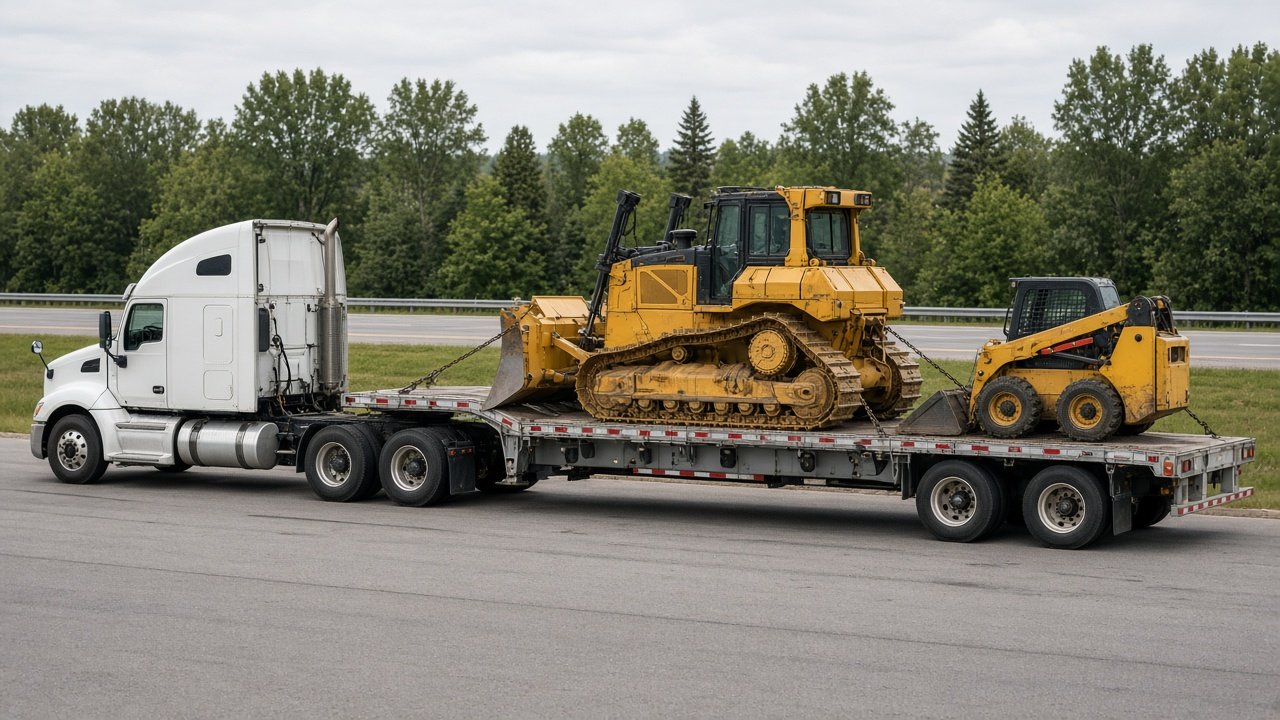
If you are shopping for heavy equipment transport near me, the first question is almost always the same: what will this actually cost? There is no single sticker price. A skid steer on a hotshot gooseneck and a 70,000 lb excavator on an RGN are different jobs — different trailers, permits, escorts, and transit times.
This guide breaks down what drives the quote so you can compare haulers fairly and avoid surprise add-ons.
Typical price ranges (ballpark, not a bid)
Most interstate heavy equipment moves are quoted per mile or as a flat door-to-door rate. Rough industry ranges shippers commonly see:
- Small equipment / hotshot (skid steers, mini excavators, compact loaders): often in a lower per-mile band when it fits a gooseneck or step deck without permits.
- Standard heavy haul (mid-size excavators, dozers, backhoes on step deck or RGN): mid-range per mile, sometimes with height/width checks.
- Oversize / overweight (wide, tall, or multi-axle RGN with permits and possible escorts): higher per mile plus permit and escort fees.
Exact numbers move with diesel, lane demand, season, and how fast you need it loaded. Treat online “averages” as orientation only — a real quote needs dimensions, weight, and both zip codes.
What actually changes your heavy equipment shipping cost
1. Dimensions and weight
Length, width, height, and weight decide the trailer. Once you cross state oversize thresholds, you are into permits and sometimes escorts. Measure twice (including attachments, buckets, and railings). The FHWA Freight Management resources are a useful overview of how oversize freight is regulated on the National Highway System.
2. Trailer type
- Gooseneck / hotshot — lighter, faster for compact machines.
- Step deck more deck length under legal height than a straight flatbed.
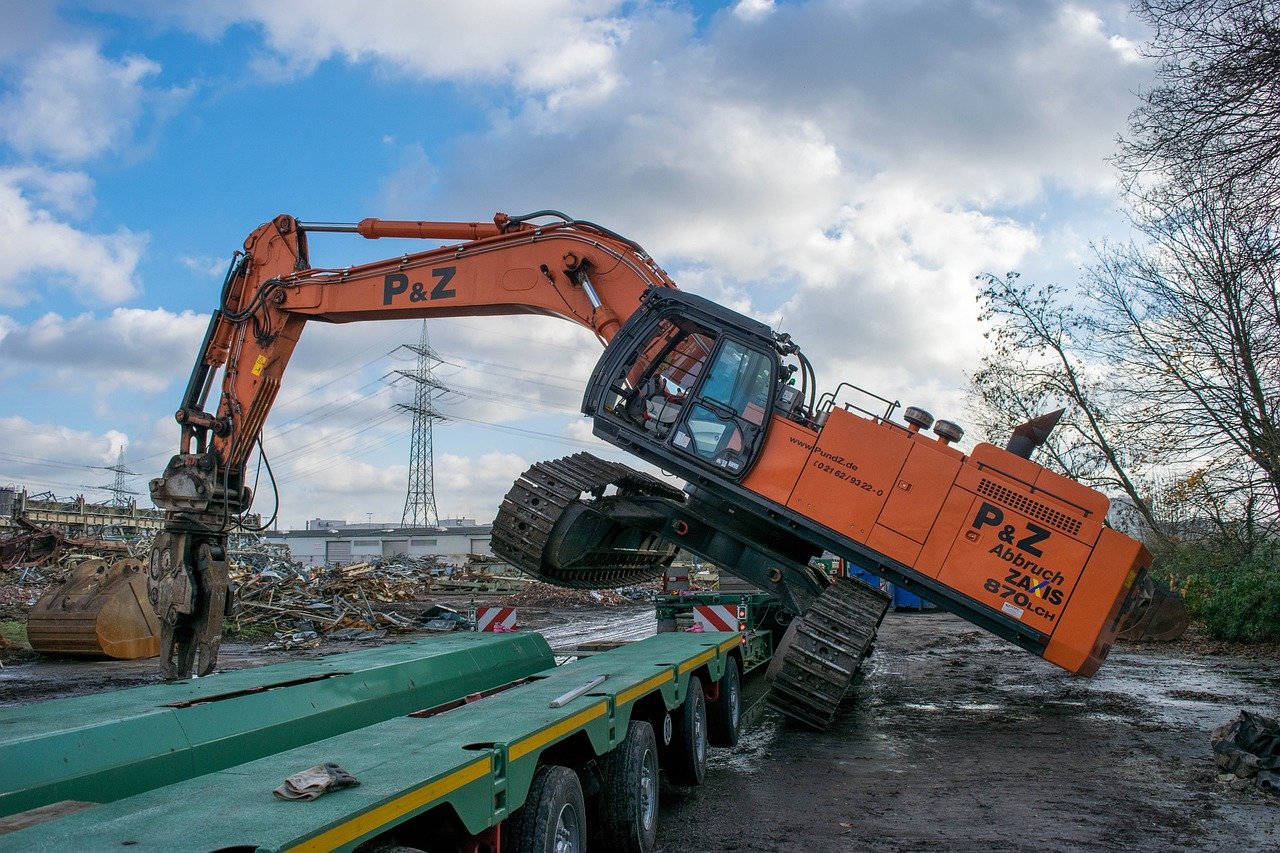
- RGN / lowboy — for tall or heavy iron that needs a low deck and ramps.
Wrong trailer = delays, re-quotes, or a machine that will not clear bridges. For a deeper trailer comparison, see Logi Transports’ guide on RGN vs step deck vs flatbed.
3. Distance and lane
Longer lanes usually lower the per-mile rate but raise total cost. Tight regional lanes can price higher per mile when truck availability is thin.
4. Permits, escorts, and timing
Oversize permits are state-by-state. Night or weekend restrictions, holiday blackouts, and multi-state routing all add calendar time — and sometimes dollars. If you need it “yesterday,” expect a premium. Carriers and brokers moving commercial equipment should also stay aligned with FMCSA safety and operating rules.
5. Loading conditions
Soft ground, no ramps, indoor docks, or machines that will not start can add crane time, rollback help, or extra labor. Tell your specialist up front.
How to get an accurate quote faster
- Pickup and delivery cities or zip codes
- Year, make, model (or clear photos)
- Operating weight and dimensions (L × W H)
- Whether it runs, and any attachments
- Preferred load date and any deadline
With that, a licensed heavy equipment specialist can match the right trailer and lane instead of guessing from a vague “excavator move.” You can start from our Find a Hauler page or the quote form on the homepage whenever youre ready. For service details, see heavy equipment transport services.
Want more on 2026 pricing factors from our sister brand? Read Logi Transports’ heavy equipment transport cost overview.
Ready for a real number?
Use the quote form on this site or call (864) 791-5644 or email quotes@logitransports.com. We help shippers find verified, insured heavy equipment transport across the U.S. — no deposit until your machine is loaded.
Leave a Reply